
 By
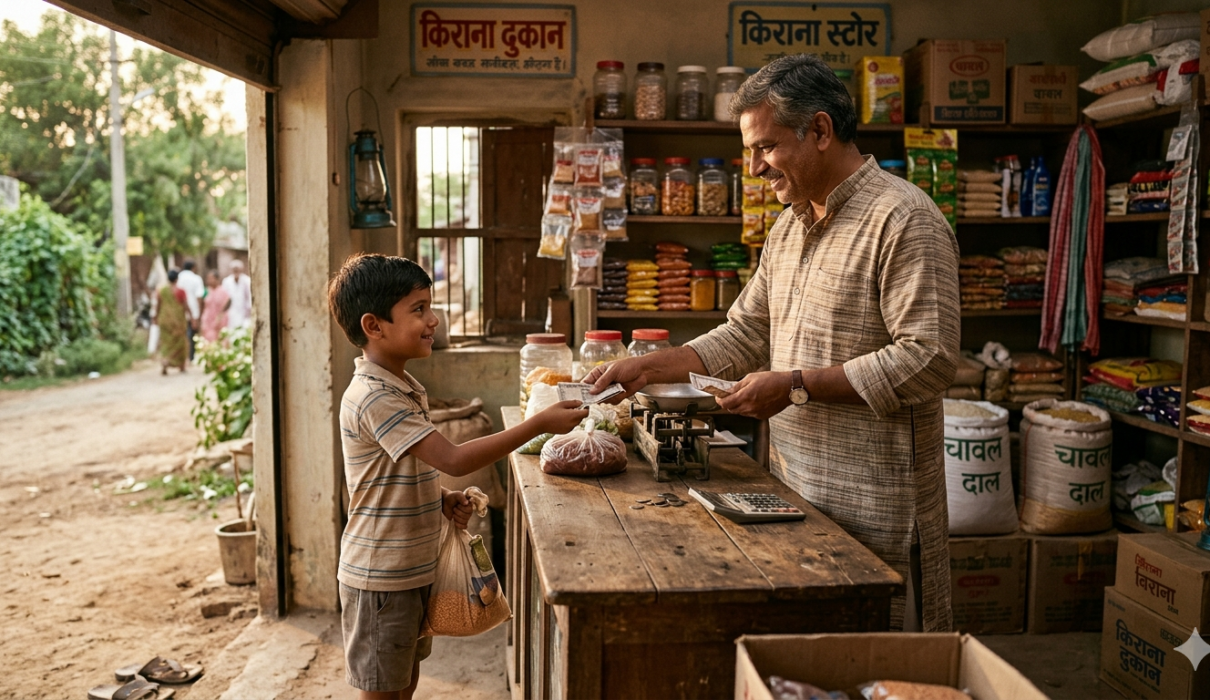
By Ramesh owned a small shop in a quiet village. Every morning, he opened his shop early and greeted his customers with a warm smile. People liked buying from him because he was always fair and polite.
One day, a young boy named Aman came to buy some biscuits and chocolates. Ramesh quickly packed the items and said, “That will be 50 rupees.”
Aman gave him a 100-rupee note. Ramesh was busy with other customers, so he returned the change without checking properly. Aman thanked him and left.
Later in the afternoon, when the shop was quiet, Ramesh counted his money. Something felt wrong. After checking again, he realized he had returned 70 rupees instead of 50. He had given 20 rupees extra by mistake.
Ramesh paused for a moment. He could ignore it. The boy might never notice. But deep inside, he knew that keeping the extra money would not be right.
Without wasting time, he closed his shop and went out to find Aman. He asked a few people in the village and finally found the boy playing near his house.
“Aman,” Ramesh said gently, “I made a mistake earlier. I gave you more money than I should have.”
Aman looked surprised. “Oh, I didn’t even notice,” he said.
Ramesh smiled. “It’s okay. But it is important to correct our mistakes.”
Aman immediately returned the extra money. He looked at Ramesh with respect.
The next day, Aman told his parents what had happened. Soon, everyone in the village heard about Ramesh’s honesty.
After that, more people started visiting his shop. They trusted him completely. Ramesh’s small shop became the most popular shop in the village—not because of low prices, but because of his honesty.
Moral
Honesty builds trust, and trust brings success.
GLOSSARY
- Shopkeeper — A person who owns or runs a shop
- Village — A small community in the countryside
- Customer — A person who buys goods
- Polite — Showing good manners
- Packed — Put items together for sale
- Change — Money returned after payment
- Counted — Checked the total amount
- Realized — Understood something clearly
- Mistake — Something done wrong by accident
- Ignore — To not pay attention to something
- Correct — To make something right
- Gently — In a soft and kind way
- Respect — A feeling of admiration
- Trusted — Believed to be honest
- Popular — Liked by many people
VOCABULARY BUILDER
- Fair — Treating people equally and honestly
- Busy — Having a lot of work
- Quiet — Calm and without noise
- Extra — More than needed
- Notice — To see or become aware of something
- Pause — To stop for a short time
- Immediately — Without delay
- Completely — Fully or entirely
- Gentle — Kind and calm in behavior
- Admire — To respect and like someone
- Honesty — The quality of being truthful
- Trust — Belief in someone’s truthfulness
- Decision — A choice made after thinking
- Action — Something that is done
- Reward — Something good received for effort
KEY PHRASES
- “a warm smile” — A friendly and welcoming expression
- “busy with customers” — Attending to many people at once
- “by mistake” — Done without intention
- “felt something was wrong” — Had a sense that something was not right
- “deep inside” — Inner feeling or conscience
- “without wasting time” — Acting quickly
- “looked surprised” — Showed sudden amazement
- “with respect” — Showing admiration
- “heard about his honesty” — People came to know his good character
- “trusted him completely” — Had full confidence in him
USAGE EXAMPLES
- He greeted everyone with a warm smile every morning.
- She was busy with customers during the festival sale.
- I picked the wrong file by mistake.
- He felt something was wrong, but could not explain it.
- Deep inside, she knew she had to tell the truth.
- They left the house without wasting time.
- The teacher looked surprised at the answer.
- He spoke to his elders with respect.
- Everyone heard about his honesty in the village.
- People trusted him completely because he was fair.
If you enjoyed this story, you may also like The Chai Wallah’s Dream: How Small Steps Lead to Big Success, a motivational story, or The Girl Who Asked: “Why?”: How Curiosity Changes Everything.