The Importance of Dusshera 🌟
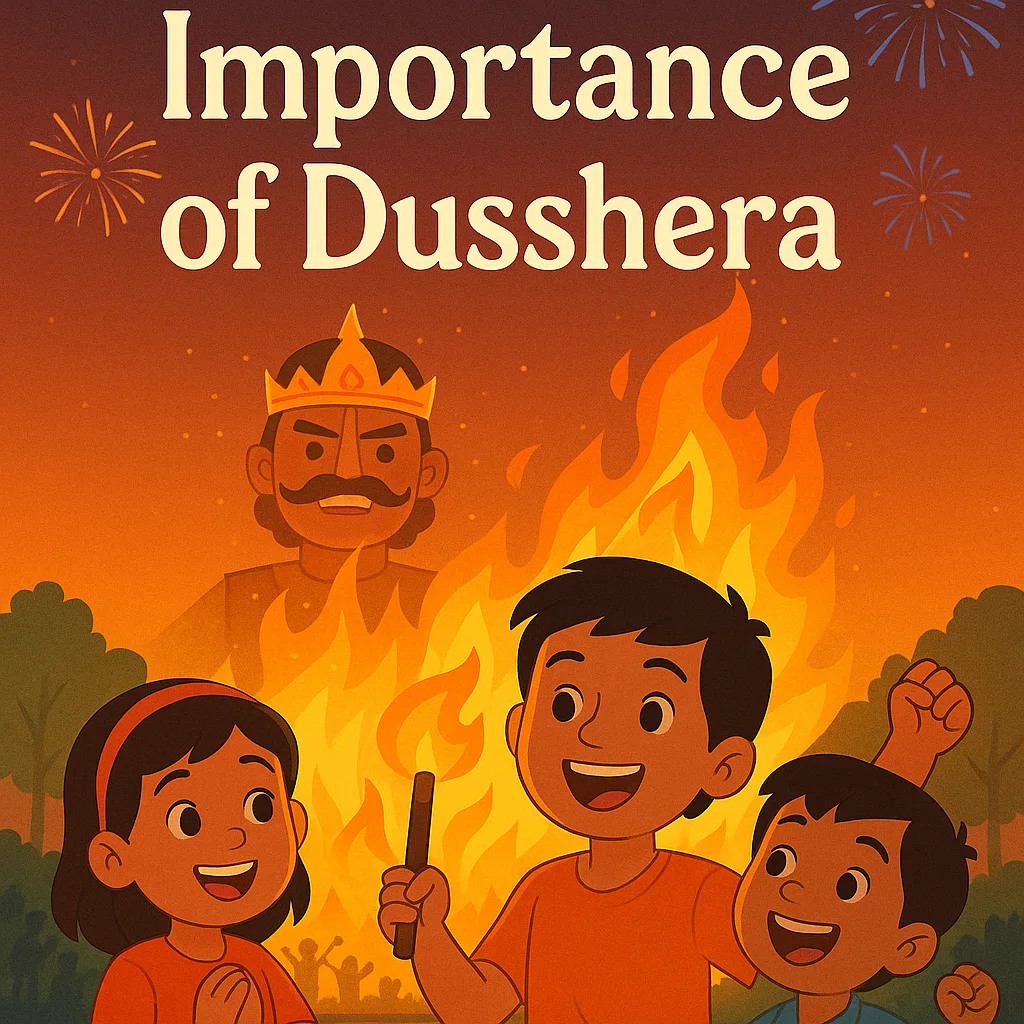
Every year, when the skies turn golden with autumn sunsets, the air fills with excitement. Streets are decorated, fairs come alive, and in the night sky, fireworks sparkle. This is the time of Dusshera, also called Vijayadashami — a festival celebrated all over India with joy and devotion.
But do you know why we celebrate Dusshera and what lessons it holds for us, especially for kids today? Let’s take a journey into its meaning.
🌿 The Story of Dusshera
Dusshera marks the victory of good over evil. The most popular story is from the Ramayana. Lord Rama fought the mighty demon king Ravana, who had kidnapped Sita. After a fierce battle, Rama defeated Ravana on the day of Dusshera.
Across the country, effigies of Ravana are burnt, symbolizing the destruction of arrogance, greed, and negativity. The crackling fire is not just about defeating an enemy outside — it is also about burning the Ravana within us.
🌿 What Does “Ravana Within” Mean?
Each of us has small shadows inside — like fear, anger, jealousy, or selfishness. Just like Ravana had ten heads, we too sometimes feel like we have many negative thoughts at once.
Dusshera teaches us to recognize these shadows and let them go. For kids, it means:
- Don’t fear exams or challenges — be courageous like Rama.
- Don’t bully others — instead, be kind and fair.
- Don’t hold on to anger — learn to forgive and stay calm.
When we burn Ravana’s effigy, it’s a reminder to burn away these bad habits and live with goodness.
🌿 Courage and Fearlessness
Dusshera is also about courage. Rama didn’t win alone — he had the support of Hanuman, Lakshman, and an entire army of friends who believed in him. This shows us that we don’t need to fight life’s challenges alone. We can lean on family, teachers, and friends.
Being fearless doesn’t mean never being afraid. It means standing up even when things look difficult — just like Rama faced Ravana without losing heart.
🌿 The True Victory
The word “Vijayadashami” means “the victory on the tenth day.” But the true victory is not just over an enemy. It is victory over one’s own weaknesses, fears, and bad habits.
So, when you watch the giant Ravana effigy burn and cheer as the fireworks light up the night, remember — the celebration is really about your own inner victory.
🌿 How Kids Can Celebrate Dusshera Meaningfully
- Write down one bad habit you want to let go of and imagine burning it with Ravana’s effigy.
- Spend time helping a friend or sibling — kindness is part of true victory.
- Read a story from the Ramayana and think about how Rama’s courage can inspire you.
- Dusshera is not just a festival — it’s a message:
✨ “No matter how big the problem, goodness and courage will always win.” ✨
Vocabulary Section (For Kids):
- Effigy – A large model or statue of someone, often burnt during festivals.
- Arrogance – Thinking you are better than others.
- Forgive – To stop being angry at someone who hurt you.
- Courage – The strength to do something even when it’s scary.
- Victory – Winning or succeeding
Comprehension Quiz (For Kids):
-
Who did Lord Rama fight on Dusshera?
-
What does burning Ravana’s effigy symbolize?
-
What does “Ravana within us” mean?
-
How can kids celebrate Dusshera meaningfully?
-
What is the true message of Dusshera?