English Short Stories

The Poison of Words

The Poison of Words

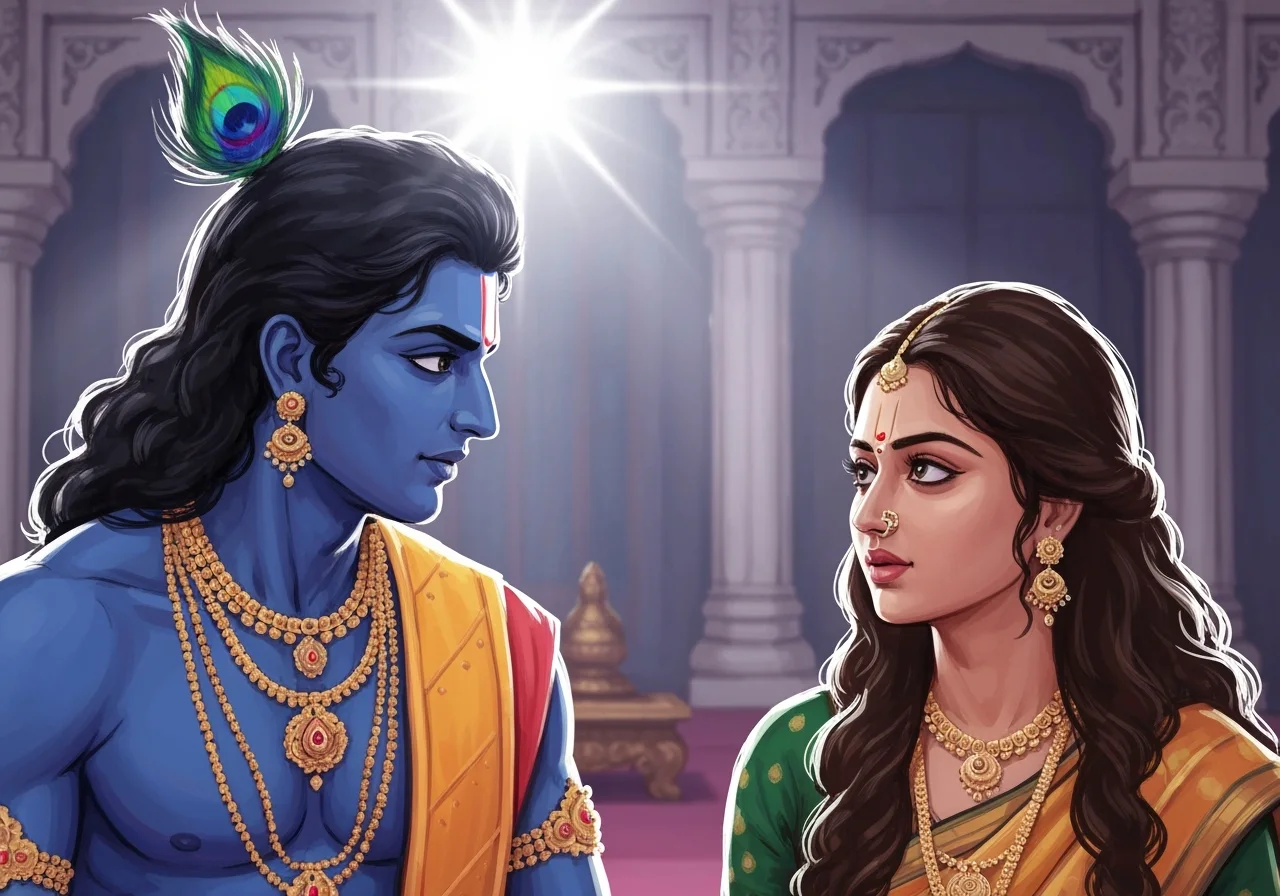
Krishna and Draupadi having a deep conversation in a royal chamber, reflecting on destiny and karma, with an air of wisdom and compassion
Reading Time: 3 minutes

The war that lasted 18 days had aged Draupadi beyond her years. Physically and mentally, she felt like an 80-year-old woman. The city was filled with widows, and men were scarce. Orphaned children wandered the streets, and Draupadi—the queen—sat alone in the empty palace of Hastinapur, staring into nothingness.

Just then, Lord Krishna entered her chamber.

As soon as Draupadi saw him, she ran and clung to him. Krishna gently stroked her head and let her cry. After a while, he helped her sit up on the nearby bed.

“What has happened, my friend?” Draupadi asked, her voice trembling.

“I never imagined it would come to this,” she said.

Krishna replied calmly, “Fate is cruel, Draupadi. It doesn’t follow what we wish. It turns our actions into results—results we often don’t expect.”

“You wanted revenge, and you got it. Your revenge is complete. Not just Duryodhana and Dushasana, but all the Kauravas are gone. You should be happy.”

Draupadi looked at him, hurt. “Are you here to soothe my wounds or to rub salt into them?”

Krishna smiled gently, “I’m here to show you reality. We don’t see the full consequences of our actions when they happen. Later, it’s out of our hands.”

She asked quietly, “So, am I completely responsible for this war?”

“Don’t think that highly of yourself,” Krishna said. “But if you had been a little more thoughtful, you might have avoided so much pain.”

“What could I have done?” Draupadi whispered.

“You could have done much,” Krishna said. “When your swayamvar happened, you insulted Karna and didn’t give him a chance to compete. Perhaps the results would have been different. Later, when your mother-in-law told you to become the wife of five husbands, if you had refused, things might have turned out differently. And when you insulted Duryodhana in your palace, calling him ‘the son of a blind man,’ if you hadn’t said that, your disrobing might never have happened.”

Krishna looked at her kindly. “Our words are also actions, Draupadi. We must weigh every word carefully before speaking. Otherwise, the damage affects not just us but everyone around us.”

“Among all creatures, only humans have poison not in their teeth, but in their words.”

“So always choose your words wisely. Use words that don’t hurt others’ feelings.”

Because within each of us lies a little Mahabharata.

Jai Shri Krishna!

Moral of the Story:

Words carry power. They can heal or hurt, build or destroy. Think before you speak—because sometimes, the poison of words causes more damage than any sword.

Glossary of Key Words

  • Draupadi: The queen of Hastinapur, a central character in the Mahabharata.
  • Karna: A great warrior, often misunderstood and insulted in the epic.
  • Kauravas: The 100 cousins who fought against the Pandavas in the Mahabharata war.
  • Swayamvar: An ancient Indian ceremony where a princess chooses her husband from among suitors.
  • Disrobing (Cheer-haran): The act of trying to strip Draupadi’s sari in the court, a major humiliation event.
  • Mahabharata: One of the two great Indian epics, telling the story of a family feud and war.

Vocabulary List

  • Poison: A harmful substance; here, it refers metaphorically to hurtful words.
  • Fate: Destiny or the outcome that seems predetermined.
  • Revenge: The action of inflicting harm in return for a perceived wrong.
  • Wounds: Physical or emotional injuries.
  • Reality: The state of things as they actually exist.
  • Consequences: Results or effects of actions.
  • Thoughtful: Showing careful consideration.
  • Insult: To speak or act disrespectfully towards someone.
  • Humiliation: The act of making someone feel ashamed or foolish.
  • Poison in Words: Harmful or hurtful speech.
  • Emotions: Feelings such as sadness, anger, or joy.
  • Compassion: Sympathy and concern for the sufferings of others.

One more story before you go...

A young archer standing in a temple courtyard at sunrise with his bow drawn, an elderly guru seated beneath a neem tree in the background, spiritual story about overcoming overthinking and finding peace.

Beyond the Target

Reading Time: 3 minutesRahul stood in the temple courtyard with his bow, unable to release the arrow. His hands trembled. His mind raced. The archery tournament was next week. He had trained for

Read More »
A young black crow perched on a neem tree branch at dusk, surrounded by white doves below, moral story about identity and staying true to yourself.

The Crow Who Forgot His Name

Reading Time: 2 minutesIn a small temple garden in Bangalore, there lived a crow named Kavi. He was sleek and clever, with feathers black as monsoon clouds. But he was always alone. Every

Read More »
A mother and teenage son sitting together at a kitchen table with aloo parathas, warm lighting, family moral story about understanding your parents better.

The Language He Didn’t Know

Reading Time: 2 minutesArjun slammed his bedroom door. Again. His mother had said no to the gaming tournament. Just like that. No explanation. No understanding. He was seventeen—old enough to make his own

Read More »

Stories you may like...

What story will you get?

📖 Finding your next story...

Learn something new

Featured Vocabulary
Confused
unsure about what to do or which direction to take. You might say: He looked confused standing at…
Literary Term
Football practice
sports training session
Idiomatic Expression
"treated every customer like they mattered"
Made everyone feel important and valued
Speech & Pronunciation
Realised
Phonetic: say it like: ree-UH-lyzed

Sign up to my newsletter

A story for every mood: