
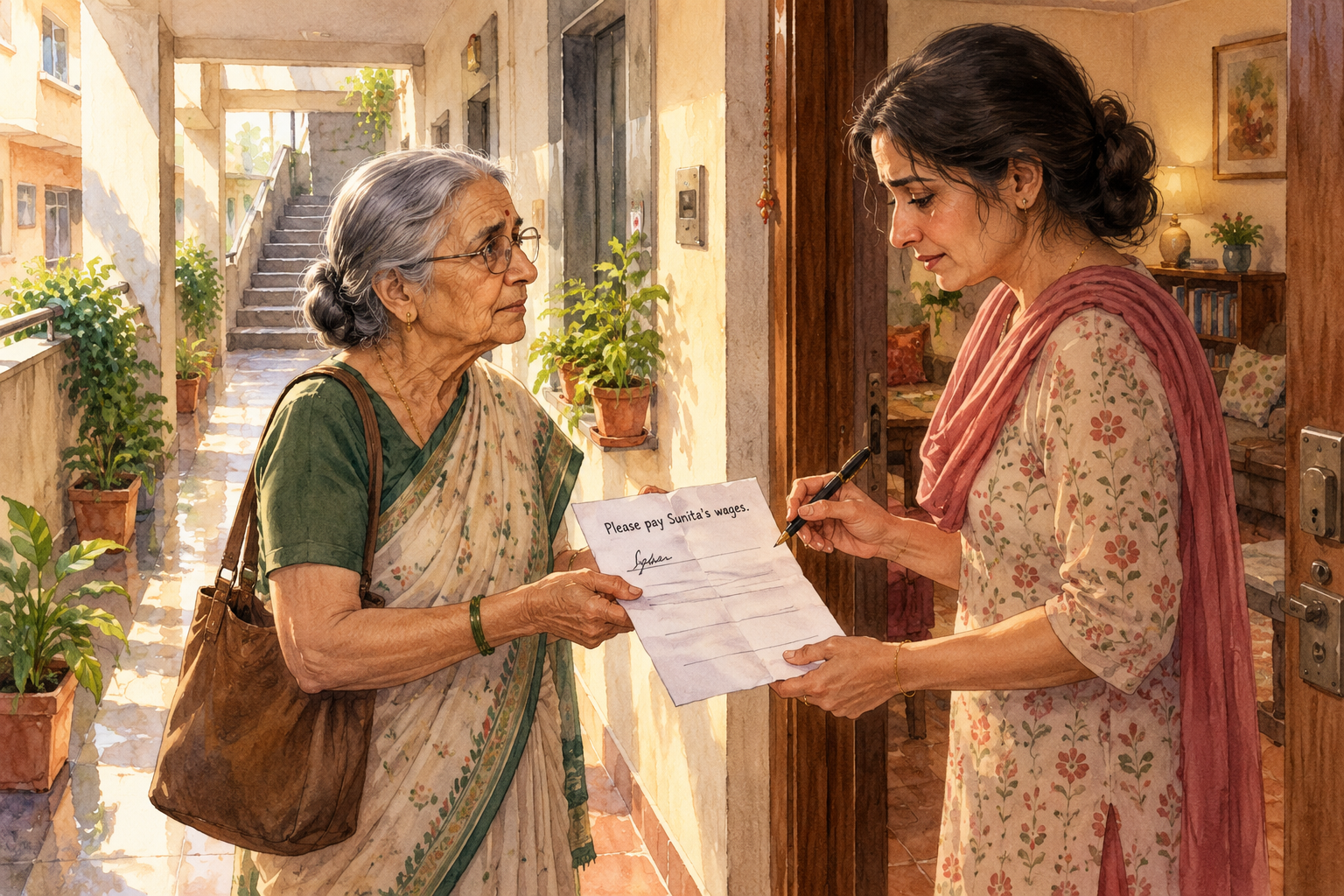
Mrs. Kulkarni had one sheet of paper and forty-two doors. She was seventy-one and lived on the second floor of Sai Residency, a housing society in Mumbai. For two months, the society office had held back the wages of Sunita, who swept the stairs and washed the compound at six every morning. The committee said funds were short. Sunita did not complain.
Mrs. Kulkarni had noticed that she no longer stopped for tea.
So she wrote one line at the top of the sheet: “Please pay Sunita’s wages.” Then she put on her chappals and went to knock.
At 101, Mr. Rane said, “Let the committee decide.” At 203, a young woman said she did not want any trouble. At 304, nobody opened at all. By the fourth floor, her knees were hurting. The paper in her hand felt very light, and very silly. One name on it. Her own.
This is a story about one old woman, forty-two doors, and the moment a community chooses to see someone. Inspired by Maa Katyayani, the sixth Navadurga form who was formed from the combined radiance of many gods, “Forty-Two Names” is a quiet, contemporary story about courage, signatures, and a broom set aside.