
In the quiet town of Anandpur, Valentine’s Day arrived not with grand celebrations but with small red decorations in shop windows and handwritten offers pasted outside gift stores. Aarav noticed them all as he walked back from his father’s stationery shop. Heart-shaped balloons, imported chocolates, soft toys — everything seemed to whisper the same message: If you care, you must spend. His college friends were planning surprises, booking café tables in the nearby city, and discussing which brand of perfume would impress the most. Aarav listened silently. He liked Meera deeply, but his father’s modest income and his own sense of dignity did not allow him to compete in that race.
Meera was different from most girls in their class. She preferred sitting near the old banyan tree in the college courtyard, reading quietly between lectures. She respected teachers, spoke gently, and never measured people by their clothes or possessions. Aarav admired her simplicity. Yet, as February 14 approached, doubt began to trouble him. What if she expects something special? he wondered. That evening, he counted his savings. It was barely enough for a bouquet and a small box of chocolates. For the first time, love felt like pressure rather than happiness.
At dinner, Aarav’s grandmother noticed his silence. She had lived through years when letters carried emotions across cities and promises were made without witnesses. When he hesitantly shared his worry, she smiled and said, “In our time, we did not show love by spending money. We showed it by speaking truthfully and standing by our word. Gifts fade, but sincere words stay.” Her voice was calm, firm with experience. That night, instead of going to the market, Aarav sat at his wooden study table. Under the soft yellow light, he began to write.
The letter was simple. No dramatic poetry, no copied quotes. He wrote about the first day he noticed her helping a junior student who had lost her way. He wrote about how her kindness inspired him to become a better person. He promised respect — not possession. He promised partnership — not pride. He thanked her for being someone who valued family, tradition, and honesty. When he finished, he folded the paper carefully and placed it inside a plain envelope from his father’s shop. There were no hearts drawn outside, no glitter, only her name written neatly in blue ink.
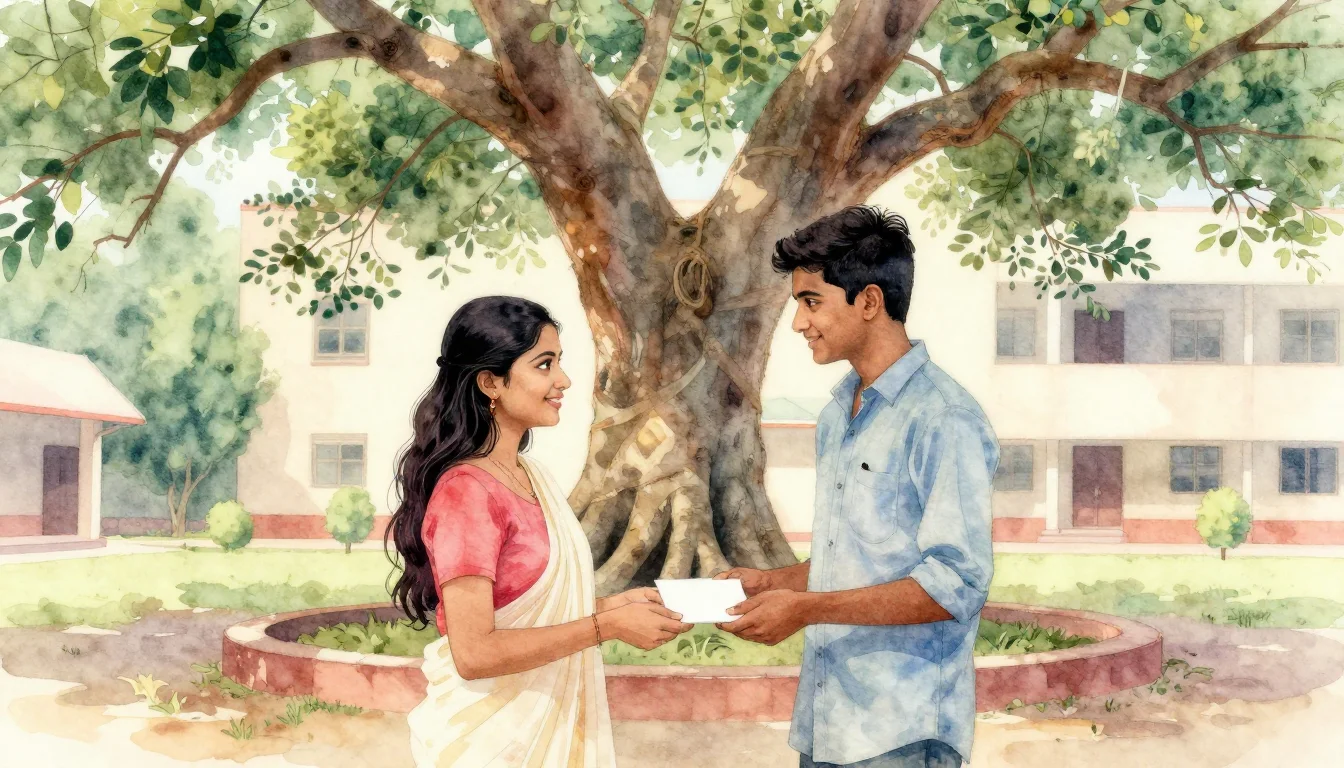
The next afternoon, under the banyan tree, Aarav handed Meera the envelope. His hands trembled slightly. She looked surprised but accepted it quietly. As she read, her expression softened. When she finished, she did not speak immediately. Instead, she looked up and said gently, “This is the most beautiful gift I’ve ever received.” There were no photographs taken, no public display, no applause from friends. Just two young adults standing with dignity and understanding. In that simple moment, Aarav realized something important — love does not need witnesses when it carries sincerity.
Days passed, and Valentine’s decorations disappeared from the market. The balloons lost air. The chocolates were discounted. But the letter remained safely tucked inside Meera’s favorite book. Years later, when life became busy and responsibilities grew heavier, that letter would remind them both of the foundation on which their relationship was built — respect, truth, and simplicity.





